160 Christian Coloring Pages Kdp
A Designer’s First Look: Clean, Calm, and Purposefully Simple
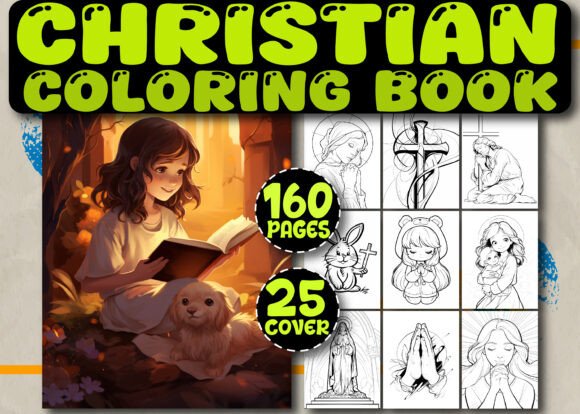
Opening 160 Christian Coloring Pages Kdp, I felt an immediate sense of quiet intention—not flashy, not crowded, but gently focused. As someone who regularly adapts coloring page graphics into machine embroidery designs, I scanned for what matters most: clear outlines, intentional negative space, and consistent line weight. These pages deliver that. The scenes—kids in prayer, young shepherds, Jesus teaching—use soft, rounded shapes and generous margins. No frantic crosshatching or micro-dots. That’s a win. It means fewer headaches when converting to stitch paths, less risk of thread breakage on fine details, and better readability at small scales—say, a 3-inch embroidered patch on a baby bib or a nursery pillow cover.
Real Project Test: Stitching a Faith-Based Tote for a Church Boutique
Last week, I pulled one of the “kids holding hands at church” illustrations to test as a sweatshirt embroidery design for a local ministry boutique. I resized it to fit a 4×4 hoop, cleaned up stray vector points, and ran a quick fill-stitch test on cotton twill with medium tear-away stabilizer. The result? Crisp edges, even stitch coverage, and zero floaters. Because the original lines are bold and unbroken—not pixelated or overly thin—the satin stitch borders held beautifully. Customers responded warmly to the warmth and sincerity of the image; it didn’t feel like clip art. It felt like a handmade product with heart. That emotional resonance matters—especially for custom apparel, personalized gifts, and holiday embroidery like Easter or Christmas tote bags sold through Etsy or craft fairs.
Where This Design Shines (and Where It Needs Care)
160 Christian Coloring Pages Kdp works exceptionally well for:
- Embroidered patches—clean outlines translate directly to clean cut edges and stable backing;
- Baby embroidery—soft themes pair naturally with onesies, burp cloths, and crib blankets;
- Nursery decor—the gentle scale and open composition hold up beautifully on pillow covers and framed hoop art;
- Small shop merchandise—think aprons, tea towels, or kitchen linens where clarity > complexity;
- Printable mockups—these graphics convert cleanly to PNGs with transparent backgrounds for digital product previews.
But here’s where attention is needed:
- Hoop size matters. Some scenes include multiple figures or subtle background elements (like a simple cross or doves). Don’t force them into a 2.5-inch hoop without simplifying first.
- Texture vs. fidelity. On highly textured fabrics—like terry cloth towels or bouclé sweatshirts—stick to bolder, more isolated motifs (e.g., a single praying child) rather than full-group scenes.
- Dark fabric demands contrast. Since these are line-art-based Graphics, avoid light thread on dark fabric unless you add a white underlay—or choose motifs with built-in shape definition (like silhouetted figures against a solid ground).
- Curved surfaces need testing. A cap front or curved apron pocket will distort fine interior lines. Prioritize outer contours and reduce internal detail before digitizing.
What It Adds to Your Finished Product—Beyond the Stitch
This isn’t just about legibility under needle and thread. 160 Christian Coloring Pages Kdp brings quiet professionalism to handmade products. When stitched thoughtfully, it signals care—not just craft. Parents notice the respectful tone in the imagery. Churches appreciate the age-appropriate reverence. Etsy buyers trust that a design this cohesive was chosen intentionally, not grabbed from a generic pack. That builds brand consistency across your craft business, whether you’re selling embroidered baby items or faith-based apparel bundles. And because the mood is joyful but grounded—not cartoonish or sentimental—it avoids aging quickly. That longevity helps your small shop product stand out season after season.
Practical Embroidery Designer Notes You’ll Want to Keep Handy
Before turning any page from 160 Christian Coloring Pages Kdp into a finished embroidery file:
- Test on scrap fabric first—especially if using stretchy knits or lightweight cotton;
- Check thread color contrast early—some scenes rely on outline weight alone, so low-contrast threads can disappear;
- Review stitch density manually—even simple-looking Graphics can generate dense fill areas that pucker thin fabric;
- Confirm hoop size compatibility before digitizing; don’t assume all 160 fit standard hoops;
- Inspect small details like fingers, facial features, or text—if it’s too fine for your smallest needle, simplify or omit;
- Test in black-and-white mockups to gauge silhouette strength on varied backgrounds;
- Use proper stabilizer—lightweight cut-away works best for baby items; tear-away suffices for stable woven fabrics;
- Verify licensing before selling finished embroidered goods or reselling digitized versions—this is a Coloring Pages collection, not a pre-digitized embroidery file;
- Ask yourself: Does this motif serve my customer’s values—and my brand’s voice? With 160 Christian Coloring Pages Kdp, the answer is often yes—but only when chosen deliberately.
Final Thought: A Quiet Asset for Meaningful Making
I don’t reach for every coloring page collection. Most lack the visual restraint needed for clean embroidery translation. But 160 Christian Coloring Pages Kdp does. It’s not loud. It doesn’t try to dazzle. It offers substance, simplicity, and sincerity—three qualities that stitch beautifully into real-life projects: a baptismal blanket, a youth group sweatshirt, a pastor’s gift apron, or a boutique’s holiday collection. For embroidery designers, Etsy sellers, and creative entrepreneurs building something meaningful—not just marketable—it’s a quietly reliable set of design assets. Just remember: its strength lies in thoughtful use, not automatic application. Choose wisely, test thoroughly, and let the clarity of the line carry the message.