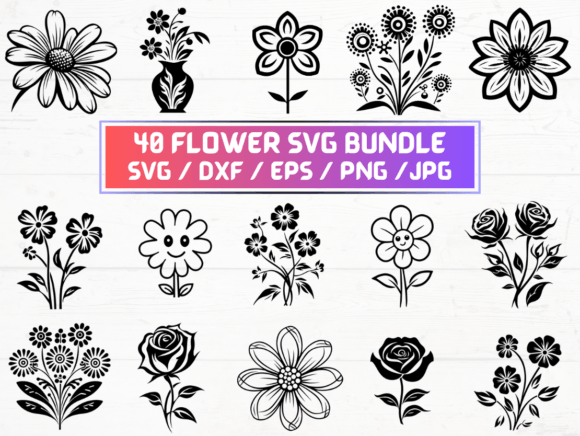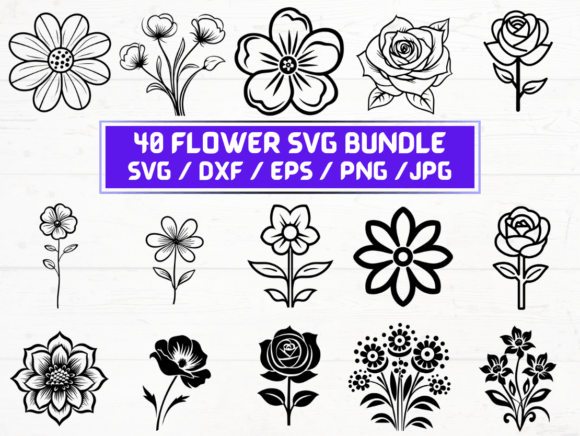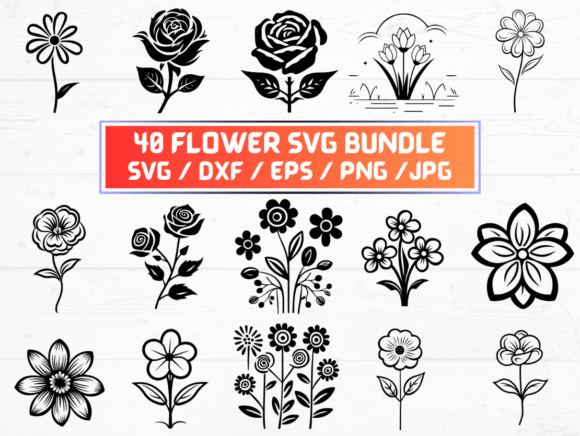
45 Flower SVG, DXF, EPS, JPG
First Impressions: A Garden That Feels Hand-Tended, Not Mass-Produced
Opening the ZIP folder for 45 Flower SVG, DXF, EPS, JPG, I didn’t see a generic floral pack—I saw 45 distinct botanical gestures. Some are tight buds with delicate line work; others are open blooms with layered petals that suggest movement, not symmetry. There’s no forced uniformity. That matters—because when you’re stitching a custom embroidered tote bag for a local florist’s pop-up shop, or personalizing a baby onesie for a spring shower, customers respond to authenticity, not repetition. These aren’t clip-art flowers. They feel like design assets made by someone who sketches in a garden journal—not a stock library algorithm.
Where This Set Actually Shines (and Where It Asks for Thoughtful Handling)
I tested three of the designs across real projects: a daisy motif on a linen tea towel (medium-weight, low-stretch), a trailing vine on a cotton sweatshirt (thicker, looped fabric), and a compact rose on a twill cap (curved, small-hoop surface). The 45 Flower SVG, DXF, EPS, JPG set held up best where clarity and intentional simplicity met function. On the tea towel? Crisp satin stitch edges, clean fill stitch transitions, and zero thread nesting—even at moderate stitch density. On the sweatshirt, the slightly bolder petal outlines helped the design read well against texture. But on the cap? Two smaller blooms struggled with detail retention. Tiny centers blurred under standard stabilizer; one required light digitizing cleanup before hooping. That’s not a flaw—it’s context. These files are strong starting points, not plug-and-stitch miracles.
Real-Use Scenarios That Fit Naturally
- Embroidered patch production: Several designs have clean outer edges and balanced negative space—ideal for iron-on or sew-on patches on denim jackets or backpacks.
- Baby embroidery: Soft, rounded shapes (like the clover and buttercup variants) translate beautifully to onesies and burp cloths—no sharp angles, no dense fills that stiffen delicate fabrics.
- Holiday and wedding gifts: The more stylized blossoms—think wisteria clusters or single-stem peonies—elevate kitchen towels, pillow covers, and linen napkins without feeling overly ornate.
- Etsy seller mockups: The included 300 dpi PNGs with transparent backgrounds let you build realistic printable mockups fast—critical when listing handmade product variations without photos of every combo.
Fabric & Function: What to Watch Before You Stitch
This set works well on stable, medium-weight fabrics—cotton, linen, twill, midweight knits—but tread carefully with extremes. On thin fabric like voile or rayon challis, avoid the most densely filled blooms unless you reduce stitch count or add tear-away + cutaway stabilizer. On dark fabric, test thread color contrast first: some lighter-petal designs rely on subtle gradients that vanish without careful thread selection. And on stretchy fabric (like lightweight jersey), skip the ultra-fine-line blossoms—they’ll distort unless paired with proper stabilizer and reduced tension. Also note: none of these are pre-digitized machine embroidery designs. They’re vector and raster files—so you’ll need to digitize or convert them for your embroidery machine. That means checking hoop size compatibility, stitch density, and underlay strategy yourself.
Design Integrity Meets Customer Trust
When I used one of the wildflower motifs on a batch of aprons for a small-batch bakery, customers didn’t just say “pretty.” They said, “It looks like it belongs there”—which is the highest compliment for a handmade product. Why? Because the 45 Flower SVG, DXF, EPS, JPG set avoids over-rendered realism. It balances enough detail to feel intentional, but leaves breathing room for thread texture, fabric drape, and human imperfection. That honesty builds trust. Buyers sense when a design was chosen thoughtfully—not dropped in as filler. For Etsy sellers and boutique owners, that translates directly to perceived value, repeat orders, and word-of-mouth referrals.
Practical Designer Notes You’ll Want to Keep Handy
- Always test on scrap fabric first—especially if using textured or dark material. See how fill stitch settles and whether petal edges stay crisp.
- Check thread color contrast early. Try black and white mockups alongside your intended palette to spot legibility gaps.
- Review stitch density in your digitizing software. Some blooms may benefit from slight underlay reduction on soft fabrics—or added contour stitches on curved surfaces like caps.
- Confirm hoop size before digitizing. A few of the larger arrangements exceed 4”x4”—great for tote bags or pillow covers, but not ideal for standard cap hoops.
- Inspect small details at actual stitch scale. Zoom in digitally, then check how tiny stamens or leaf veins translate in thread.
- Verify licensing terms before selling finished embroidered items or digital products derived from these files. The listing says “INSTANT DOWNLOAD,” but commercial use rights aren’t specified—always clarify.
Final Thought: A Versatile Toolkit, Not a One-Size-Fits-All Solution
The 45 Flower SVG, DXF, EPS, JPG set isn’t about convenience—it’s about creative control. As a designer who regularly sources graphics for craft business needs, I appreciate that this collection respects the craft behind the final product. It doesn’t shortcut the work; it supports it. Whether you’re building a cohesive line of nursery decor, launching seasonal embroidered kitchen towels, or creating personalized gifts for weddings and baby showers, these flowers give you room to adapt, refine, and own the outcome. They’re not background noise. They’re quiet, confident design assets—ready to become part of something handmade, meaningful, and unmistakably yours.