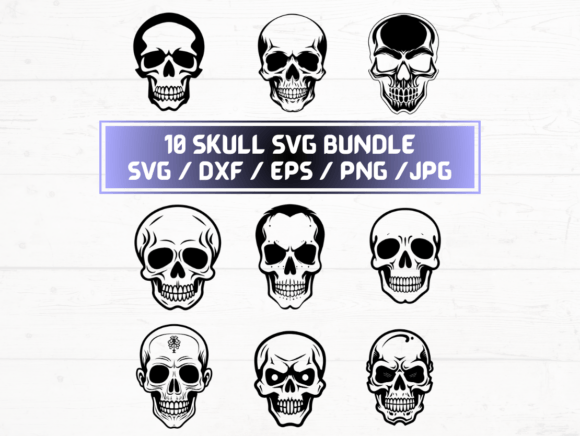
Skull SVG: Graphics for Crafts-Driven Branding
As a brand designer who’s developed visual identities for over 30 local businesses—from artisanal candle studios in Portland to small-batch hot sauce brands in Austin—I recently evaluated Skull SVG for a real-world project: rebranding a vintage-inspired apothecary boutique that sells handmade soaps, herbal tonics, and ceramic diffusers. My goal wasn’t just aesthetic fit—it was functional alignment with their voice, values, and physical packaging constraints.
A First Impression That Sets the Tone
The Skull SVG files I reviewed carry a confident, hand-drawn edge—clean lines with subtle texture, balanced negative space, and intentional asymmetry. It doesn’t scream “pirate” or “rebellion.” Instead, it reads as curious, craft-forward, and quietly bold. Think apothecary etchings, botanical sketchbook margins, or vintage pharmacy signage—not heavy metal merch. That nuance matters. For a local business, this skull isn’t about shock value; it’s a decorative motif that signals authenticity, attention to detail, and tactile craftsmanship.
It feels handmade but precise, organic but intentional, and—critically—versatile across tone shifts. Paired with serif typography and muted earth tones, it leans heritage and trustworthy. Set against crisp sans-serif type and deep indigo, it gains modern clarity. With soft watercolor textures behind it? Instantly warm and approachable.
Where Skull SVG Earns Its Place in Real Local Business Design
This graphic design asset shines where small business branding needs visual punctuation—not dominance. Here’s how it performed across tangible touchpoints:
- Product labels: Used as a subtle corner accent on 2 oz soap jars, reinforcing brand identity without crowding ingredient lists or certifications.
- Packaging design: Embossed onto kraft paper gift boxes (via foil stamp mockup), adding tactile sophistication while keeping production costs low.
- Hang tags & thank-you cards: Printed in single-color black on recycled cotton tag stock—crisp, legible, and distinctly ownable.
- Social media graphics: Animated gently in Instagram Reels for seasonal “Dark Moon Collection” launches—paired with moody lighting and slow zooms to emphasize texture and form.
- Printed marketing visuals: Scaled confidently on 18” x 24” window posters at the storefront, holding impact even at 6 feet distance.
- Product mockups: Integrated into Canva templates for Etsy listings—SVG scalability ensured pixel-perfect rendering on both desktop and mobile thumbnails.
Each use strengthened product recognition, tightened visual hierarchy, and elevated perceived quality—key drivers for customers choosing between local and mass-market options.
Why This Works for Handmade Businesses—and When to Pause
Skull SVG supports small business branding most powerfully when the business already owns its personality: think candle makers leaning into gothic botanicals, coffee roasters celebrating “dark roast” with wit, or florists designing Halloween wreaths with dried black roses and velvet ribbons. Its strength lies in being a supporting actor, not the lead.
It excels in:
- Decorative brand elements (e.g., border repeats on tissue paper)
- Hero graphics for seasonal campaigns (“Midnight Harvest,” “Bone Broth Season”)
- Accents on product mockups and printable inserts
- Boutique visuals where charm and character outweigh corporate polish
- Social media campaign graphics needing instant visual anchoring
Use carefully—or avoid—if your brand relies on:
- Ultra-minimalist or luxury positioning (e.g., white-label skincare with gold foil only)
- Tiny label real estate (<5mm height) where fine line work risks blurring
- Crowded packaging layouts where visual noise competes with regulatory text
- Backgrounds with low contrast (e.g., charcoal gray on slate blue—test transparency rigorously)
- Formal B2B contexts or municipal partnerships requiring neutral symbolism
Practical Designer Notes You Can’t Skip
Before locking in Skull SVG for client work or your own product line, run these checks—every time:
- Test on real packaging mockups—not just digital previews. Print a 1:1 label on actual substrate (kraft, glassine, matte vinyl) to assess line weight and readability.
- Check black-and-white usage: Does the skull retain shape and intent when stripped of color? Essential for cost-effective printing and accessibility.
- Preview at 12pt, 24pt, and 72pt—especially if used in price lists or menu graphics.
- Test with your full brand palette, including neutrals. Some skulls read too harsh beside cream or oat tones—this one softened beautifully with terracotta and olive.
- Compare side-by-side with top 3 local competitors’ packaging. Does it differentiate—or accidentally echo?
- Verify print quality: Open SVG files in Illustrator—check for clean paths, no stray anchor points, and editable layers. The DXF and EPS files confirmed precision for laser-cutting and large-format plotters.
- Review PNG transparency at 300 dpi: No fringing, no halo—critical for sticker sheets and layered web graphics.
- Test alongside your core fonts: It held authority next to Playfair Display (serif), gained warmth beside Montserrat (sans), and added playful contrast with a restrained script like Qanelas Soft.
- Confirm commercial license terms before applying to physical goods, client deliverables, or resale items. This set includes broad commercial rights—ideal for handmade business owners scaling beyond craft fairs.
In short: Skull SVG is more than clipart. It’s a design asset calibrated for local business realism—scalable, adaptable, and grounded in the practicalities of packaging design, product label constraints, and social media graphics performance. When matched thoughtfully to voice, audience, and medium, it becomes part of a cohesive brand identity—not just decoration.
For creative entrepreneurs building something real, tangible, and locally rooted: this is the kind of SVG design that earns its place—not because it’s trendy, but because it works, respectfully, across every surface your customer touches.