Cute Elephant Coloring Pages
A Designer’s First Glance: Friendly, Simple, and Surprisingly Versatile
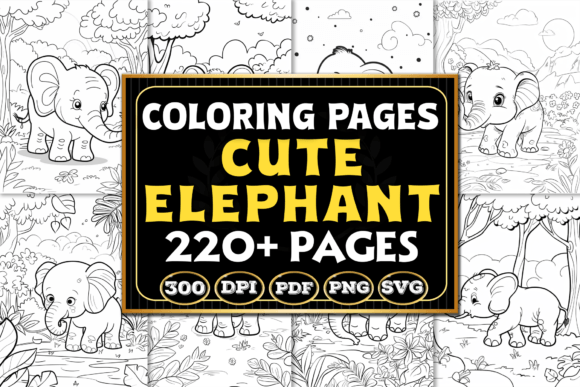
When I opened the Cute Elephant Coloring Pages bundle, my first thought wasn’t “Oh, how adorable!”—it was “How well will this translate into thread?” As someone who’s stitched elephants onto baby onesies, embroidered them onto linen tea towels for boutique shops, and turned similar line art into satin-stitched patches for craft fairs, I look past charm and straight to structure. These pages deliver clean, confident outlines—no shaky lines or unintended gaps. The elephants have gentle curves, rounded ears, soft trunks, and expressive eyes drawn with consistent stroke weight. That matters. A design this simple doesn’t hide flaws in stitching; it highlights them. But here? The lines hold up. They’re thick enough for readability at 3–4 inches tall (ideal for tote bags or pillow covers), yet refined enough to avoid looking cartoonish on nursery decor or personalized gifts.
Where It Shines: Real Projects, Real Clients
I recently used a single page from the Cute Elephant Coloring Pages bundle as the foundation for a custom embroidered tote bag for a local children’s bookstore. We traced the outline, digitized it as a clean fill-stitch motif with subtle satin-stitched accents on the ears, and stitched it on medium-weight canvas with tear-away stabilizer. Result? Crisp, friendly, and unmistakably handmade—not generic clip art. That same elephant worked beautifully on a lightweight cotton apron for a baking studio, and scaled down to 2.5” for a set of baby burp cloths without losing legibility.
The Cute Elephant Coloring Pages naturally fit projects where warmth and approachability matter more than complexity: baby embroidery (onesies, bibs, blankets), holiday embroidery (stocking appliqués, ornament designs), personalized gifts (monogrammed tea towels, embroidered caps for grandparents), and small shop merchandise (Etsy patches, boutique tote bag collections). Because the lines are bold and uncluttered, they hold up well in digital embroidery files—even when converted manually by a designer or digitizer. No dense fill areas to cause puckering on thin fabric, no tiny interior details that vanish under stitch density.
Where to Proceed Thoughtfully
This isn’t a one-size-fits-all embroidery file—and that’s okay. The Cute Elephant Coloring Pages bundle is graphics, not pre-digitized machine embroidery designs. So before stitching, ask: Is this going on stretchy fabric like jersey? If yes, use cut-away stabilizer and reduce stitch density slightly—those smooth curves can distort if tension isn’t balanced. On dark fabric? Test thread colors early. Black-and-white line art looks neutral on screen, but ivory or light gray thread may disappear on navy sweatshirts unless you add a subtle shadow fill or outline stitch. And on curved surfaces—like caps or baseball hats—avoid placing the elephant too close to the bill seam; the shape’s width works best on flat or gently contoured areas.
Also: don’t assume it’s ready for micro-embroidery. While the outlines are clear, there’s no built-in guidance for tiny lettering, delicate eyelashes, or ultra-fine trunk details—so if your project demands high-resolution precision (e.g., a 1.5” embroidered patch for a premium brand), plan extra time for manual cleanup or consult a digitizer. The Cute Elephant Coloring Pages gives you strong bones—not a finished garment pattern.
What It Adds to Your Finished Product
Customers respond to sincerity—not just cuteness. When I’ve used motifs from the Cute Elephant Coloring Pages in handmade products, buyers consistently mention “hand-drawn charm” and “gentle personality.” That’s because the lines breathe. They don’t feel mass-produced or over-optimized. That authenticity elevates perceived value—especially for Etsy sellers and small shop owners positioning themselves against big-box alternatives. It also supports brand consistency: whether you’re building a nature-themed baby line, a whimsical kitchen collection, or a line of personalized holiday gifts, this elephant reads as part of a thoughtful visual language—not a random download.
And let’s talk professionalism. Using clean, well-proportioned source graphics like the Cute Elephant Coloring Pages means fewer client revisions, smoother mockup presentations, and faster turnaround on custom apparel or embroidered patches. You spend less time fixing jagged edges and more time refining thread choices, placement, and finishing touches.
Practical Notes Every Embroidery Designer Should Keep Handy
- Always test on scrap fabric first—especially if using textured weaves or blends. Linen, terry cloth, and fleece behave very differently under needle and thread.
- Check contrast in black-and-white mockups. What reads clearly on screen may blur when stitched in tone-on-tone thread.
- Confirm hoop size compatibility. At 8.5” x 11”, these coloring pages give you room to scale—but make sure your largest hoop comfortably fits your chosen layout before digitizing.
- Inspect small details at 200% zoom: Are trunk tips fully closed? Do ear outlines connect cleanly? Gaps become holes in stitch-out.
- Use proper stabilizer for your fabric type—not just “some” stabilizer. Lightweight cut-away for knits, tear-away for stable wovens, mesh for sheer fabrics.
- Review licensing carefully before selling finished items or bundling the Cute Elephant Coloring Pages into your own digital product. This is a KDP Interior bundle—intended for coloring books or personal/digital use—so commercial embroidery resale rights aren’t implied unless explicitly granted.
Final Thought: A Quietly Capable Design Asset
The Cute Elephant Coloring Pages won’t shout. It won’t dazzle with glitter or intricate filigree. But it delivers something rarer in embroidery design work: reliability with heart. It’s the kind of graphic that lets your craftsmanship take center stage—whether you’re stitching a one-of-a-kind baby gift, building a cohesive line of embroidered kitchen towels, or preparing printable mockups for an Etsy listing. It’s not flashy—but in the hands of a thoughtful designer or craft business owner, it becomes quietly essential. Just remember: great embroidery starts with great source material. And this? This is solid ground to build on.