Cute Hamster Coloring Pages
First Impression: Sweet, Simple, and Stitch-Ready
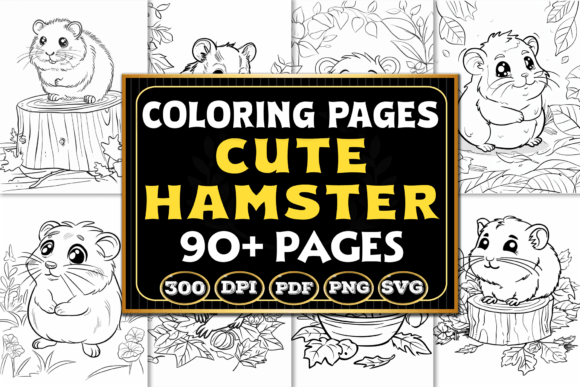
When I opened the Cute Hamster Coloring Pages bundle, my designer eye didn’t see just line art—it saw potential embroidery real estate. The black-and-white 8.5” x 11” pages have a gentle, hand-drawn charm: rounded cheeks, expressive little eyes, soft whisker lines, and subtle contouring that suggests volume without overwhelming detail. There’s no heavy shading or tight crosshatching—just clean, confident outlines with intentional breathing room between elements. That’s golden for embroidery. It tells me this isn’t just for coloring books; it’s a thoughtful foundation for machine embroidery design, especially when adapted for small-scale stitched goods like baby onesies, tea towels, or embroidered patches.
A Real Project in Mind: A Personalized Embroidered Tote for a Local Pet Shop
Last week, I was prepping a custom order for a neighborhood pet boutique—a set of canvas tote bags featuring friendly animal motifs. I pulled up Cute Hamster Coloring Pages to test how one of the simpler hamster silhouettes would translate into a 3.5”-wide satin-stitched appliqué. On screen, the shape held its personality. Once digitized (using clean centerline tracing, not auto-outline), it stitched cleanly on medium-weight cotton duck with tear-away stabilizer. No skipped stitches, no thread nesting—just smooth curves and a cheerful, recognizable hamster face. Customers loved the handmade warmth it added. That’s the quiet strength of these pages: they’re designed for clarity, not complexity—and clarity stitches well.
Where It Shines (and Where to Pause)
The Cute Hamster Coloring Pages bundle works beautifully for:
- Embroidered patches — Clean outer edges mean sharp cutaway results and crisp borders after backing removal.
- Baby embroidery — Soft shapes read clearly even at 2–2.5” tall on knit bodysuits (with light cutaway + topping).
- Tote bag & apron designs — Generous negative space lets fabric texture show through without visual clutter.
- Holiday or nursery decor — Paired with simple monograms or “Snack Time!” lettering, it adds playful sincerity without kitsch.
- Printable mockups & digital product previews — Since it’s black-and-white and bleed-free, it drops cleanly into Canva or Adobe Illustrator for Etsy listings or client approvals.
But—and this matters—I’d use caution with:
- Small hoop sizes under 3”: Some hamsters include tiny paws or inner ear details that may lose definition below 2.25”. Always simplify those manually before digitizing.
- Stretchy or textured fabrics (like terry cloth or slubbed linen): Test stitch density first. Dense fill areas can pucker; consider switching to a lighter fill stitch or open running-stitch outline instead.
- Dark fabric backgrounds: The original line art assumes white/light contrast. When stitching on navy or charcoal, double-check thread color value—light gray or ecru often reads warmer and friendlier than stark white.
- Curved surfaces (caps, mugs, curved pillow seams): Avoid placing the most detailed hamster face directly over high-curve zones unless you’ve tested stabilizer hold and stitch tension.
What It Adds to Your Finished Product
Using Cute Hamster Coloring Pages as source material elevates more than just aesthetics—it builds trust. Handmade customers respond to authenticity, not perfection. These illustrations feel approachable, not mass-produced. That translates directly to perceived value: a sweatshirt with a softly stitched hamster reads as intentional, curated, and personal—not generic clip art. For Etsy sellers or craft fair vendors, that distinction affects pricing power, repeat orders, and word-of-mouth. It also supports brand consistency: if your shop leans into cozy, nature-adjacent, or whimsical-but-refined energy, this bundle fits right in—no rebranding required.
Practical Designer Notes Before You Stitch
Before turning any Cute Hamster Coloring Pages illustration into a finished embroidery project, here’s what I do every time:
- Test on scrap fabric first—especially if using textured weaves or blends. Watch how stabilizer interacts with thread tension.
- Check thread color contrast in natural light, not just screen preview. A warm tan thread on oatmeal linen reads friendlier than jet black.
- Review stitch density in your embroidery software. If the original line art has tight internal loops (like curled tails or cheek contours), reduce fill density by 15–20% to avoid stiffness.
- Confirm hoop size compatibility. Most hamsters scale well to 4” hoops—but verify before sending to production.
- Inspect small details at 200% zoom. Tiny dots (for eyes or nose) may need manual enlargement to avoid disappearing in satin stitch.
- Test black-and-white mockups alongside color versions. Sometimes monochrome reveals balance issues invisible in full color.
- Compare light vs. dark fabric backgrounds in your mockup workflow—this informs both thread selection and listing photography.
- Use proper stabilizer: lightweight cutaway for knits, tear-away for stable wovens, and water-soluble topping for dense fills on napped fabrics.
- Confirm licensing terms before selling finished items or digital embroidery files. The product description states it’s for KDP interior use and digital/print use—but commercial embroidery rights aren’t explicitly defined. Always verify before scaling.
Final Thought: Not Just Lines—A Design Language
Cute Hamster Coloring Pages isn’t flashy. It doesn’t try to be. But in embroidery—where clarity, scalability, and emotional resonance matter more than ornamentation—that’s its superpower. It gives you a starting point that feels human-made, not algorithm-generated. Whether you’re stitching a single personalized gift or building a cohesive line of nursery-themed handmade products, these pages offer reliable, adaptable, and quietly professional design assets. They remind us that sometimes the most effective embroidery begins not with complex vectors—but with a kind, confident line.