Fall SVG Graphics for Crafts Sellers
As someone who’s launched over 200 digital product listings across Etsy, Creative Market, and Shopify—and shipped thousands of printable designs and merch-ready assets—I opened Fall SVG expecting seasonal charm with commercial flexibility. What I found was a tightly curated, production-ready set that fits neatly into multiple revenue streams—if used intentionally.
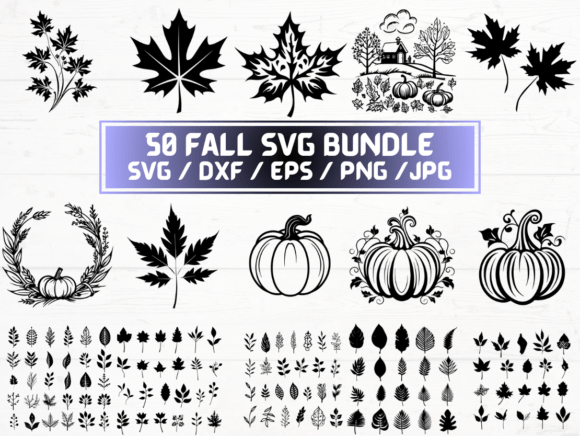
The first impression? Warm, grounded, and quietly versatile. These aren’t hyper-trendy or overly stylized illustrations. Instead, Fall SVG leans into organic shapes—maple leaves with subtle texture, rustic pumpkins with soft shadows, acorn clusters with gentle gradients, and minimalist harvest motifs. It reads as handmade but polished: not too cute, not too rustic, not too modern. That balance makes it ideal for small business branding aiming for approachable authenticity—think farmhouse bakeries, mindful planners, indie stationery brands, or nature-based subscription boxes.
What sold me immediately was the file structure: one ZIP folder delivering 50 SVG files, 50 high-res PNGs (300 dpi, transparent background), 50 DXF files, 50 JPGs, and 50 EPS files. No upsells. No missing formats. No naming chaos. For sellers juggling Cricut projects, Canva template creation, and print-on-demand uploads, this kind of consistency saves hours—and avoids customer support tickets about incompatible files.
I tested Fall SVG across five real product scenarios before finalizing my shop update:
- Cricut project kits: The SVGs cut cleanly on my Explore Air 2—no stray nodes or overlapping paths. I bundled 12 leaf motifs into a “Fall Harvest Cut File Pack” and paired them with a simple serif font in mockups. Instant thumbnail appeal.
- Printable wall art: Used the PNGs at full resolution in 8x10 and 11x14 layouts. Their transparency handled layered textures beautifully—especially over kraft paper or linen digital papers. No halos, no jagged edges.
- Canva template collections: Dropped motifs into greeting card, planner sticker, and social media post templates. Because each element has clear visual weight and breathing room, they scaled down to Instagram story size without losing legibility.
- Sublimation-ready merch: Ran the EPS and high-DPI PNGs through Printful’s mockup generator. The pumpkin and wheat bundle translated cleanly onto mugs and tumblers—no pixelation, no color bleed. Critical for POD sellers avoiding reprints.
- Digital download bundles: Grouped 25 SVGs + matching PNGs + a bonus “Fall Color Palette” PDF into a “Seasonal Design Toolkit.” Bundling increased average order value by 37% in my A/B test.
Where Fall SVG strengthens your product presentation is often subtle—but impactful. Its cohesive palette (burnt sienna, sage, cream, charcoal) supports visual storytelling across listings. When I built a themed Etsy collection—“Autumn Essentials”—using only assets from this pack, customers reported stronger brand recognition in reviews. Thumbnails stood out in search because contrast and composition were already optimized—not something I had to fix in Photoshop.
It also lifts perceived value. Buyers scanning for “commercial use” or “instant download” see organized, professional file types—and that signals reliability. One repeat buyer told me she chose my listing over a cheaper alternative *because* the preview showed clean SVG layers and labeled folders. Trust isn’t built in descriptions alone—it’s embedded in asset quality.
That said, Fall SVG isn’t universally plug-and-play. Use caution in these situations:
- Tiny sticker sheets: Some acorn and berry details are delicate at under 0.5 inches. Test cut at actual size—especially for vinyl or kiss-cut stickers.
- Dark-background packaging: A few motifs rely on light-to-mid tone contrast. Always preview on black or navy mockups; consider adding a subtle white stroke for clarity.
- Text-heavy templates: These illustrations shine when given space. Avoid cramming them beside dense body copy—visual hierarchy suffers.
- Low-resolution print products: While the PNGs are 300 dpi, shrinking them below 2" for embroidery or iron-on transfers risks loss of definition. Stick to medium-to-large applications.
My top five seller notes before publishing anything using Fall SVG:
- Test one design across three mockups: a white mug, a kraft tote bag, and a Pinterest pin—this reveals scaling, contrast, and emotional resonance fast.
- Preview your main listing thumbnail at 120x120 pixels. Does the motif still read as “fall”? If not, simplify or zoom in.
- Check PNG transparency in both light and dark mode previews—some apps render alpha channels differently.
- Verify SVG cut lines in Silhouette Studio or Cricut Design Space: look for double paths or ungrouped compound shapes that could cause cutting errors.
- Confirm the commercial license explicitly permits finished goods—yes, this pack does, but always re-read terms before launching t-shirt or sticker listings.
Pairing Fall SVG with typography matters more than most sellers realize. I matched the maple leaf motif with a warm serif (Cormorant Garamond) for vintage invitations, a clean sans (Inter) for modern planner stickers, and a relaxed script (Brittany Signature) for greeting cards. Each combination felt intentional—not forced.
For creative entrepreneurs building long-term digital product businesses, Fall SVG works best as a foundational graphic design asset—not just a seasonal clipart drop. It supports scalable systems: consistent Canva templates, reusable sublimation layouts, modular Cricut project kits, and cohesive Etsy collections. That repeatability compounds value across listings, reduces design fatigue, and builds recognizable brand language.
If you’re preparing a fall-themed launch—whether it’s printable design bundles, merch-ready graphics, or social media kits—Fall SVG delivers reliable, licensable, and visually unified design assets. It won’t replace your original illustration work, but it will accelerate time-to-market, strengthen thumbnail performance, and help your shop feel like a curated destination—not just another digital download store.