Flame SVG: Graphics for Crafts & Creative Sellers
As a digital product creator who’s launched over 200 Etsy listings—and scaled three print-on-demand shops—I opened Flame SVG expecting either instant utility or a quick archive. What I found was something more nuanced: a versatile, mood-driven graphic design asset with clear commercial potential—if used intentionally.
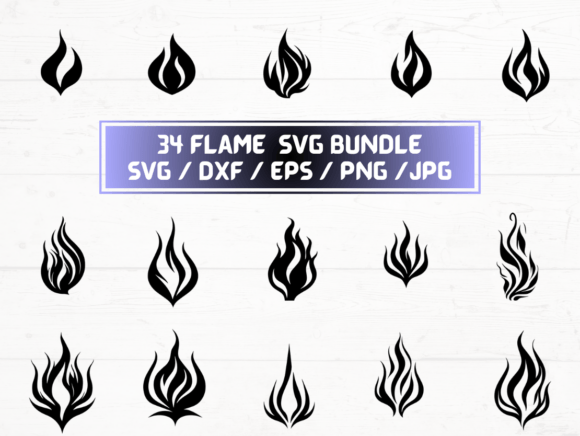
First impression? It reads as bold but not aggressive—flame shapes that lean into organic flow rather than sharp cartoonish edges. There’s warmth without kitsch, energy without chaos. This isn’t “fire emoji” territory. It’s the kind of flame you’d see on a boutique candle label, a yoga retreat poster, or a limited-edition tumbler wrap. The visual personality lands somewhere between modern artisan and elevated festival aesthetic—ideal for sellers targeting mindful makers, wellness brands, or small-batch lifestyle businesses.
That mood translates directly to audience appeal. Think Etsy shoppers searching for “boho wall art,” “spiritual planner stickers,” or “minimalist mug designs.” It also fits seasonal collections—especially autumn launches, solstice-themed digital downloads, or even wedding welcome signage where “eternal flame” symbolism adds quiet elegance. Not every flame graphic works across niches, but this one avoids cliché while keeping strong visual recognition.
Where Flame SVG shines is in its file diversity and production readiness. The package delivers 34 unique flame variations across five formats: SVG, PNG (300 dpi, transparent background), DXF, JPG, and EPS. That’s not just convenience—it’s commercial flexibility. For Cricut users, the clean SVG and DXF files cut precisely on vinyl and heat transfer material. For Canva template sellers, the high-res PNGs drop seamlessly into editable layouts without transparency hiccups. Print-on-demand sellers get EPS files for scalable vector use on mugs, tote bags, and apparel—no pixelation at any size.
I tested Flame SVG across six real product scenarios before finalizing a listing:
- Printable wall art bundle: Paired two flame illustrations with serif typography and neutral textures—immediately elevated perceived value in thumbnail previews.
- Cricut sticker sheet: Used the SVG files with layered shadow effects; cut lines held crisp at 1.5" height, no jagged edges.
- Sublimation tumbler wrap: Scaled the EPS version to fit a 20oz curved surface—no distortion, smooth gradient transitions.
- Canva invitation template: Dropped the PNG into a dark-mode layout; verified contrast against navy and charcoal backgrounds.
- Digital planner sticker pack: Resized the smallest PNGs to 0.75"; retained clarity for tablet use—critical for planner sticker buyers.
- Social media promo kit: Used simplified flame icons as bullet points in Instagram carousels—clean visual hierarchy, fast scannability.
For product presentation, Flame SVG supports stronger listing performance. Its consistent line weight and balanced negative space make it highly legible in Etsy thumbnails—even at 150x150px. When paired with mockups (a rustic wood mug, a linen tote, a matte black phone case), it conveys premium handmade business energy—not clipart. That builds customer trust faster than generic alternatives.
It performs best in contexts where visual storytelling matters: themed digital download bundles (“Sacred Elements Collection”), seasonal Canva templates (“Autumn Journal Kit”), or printable nursery art (“Gentle Light Series”). On packaging design or brand identity projects, it adds symbolic weight without overwhelming minimal layouts. And for social media graphics, it works as both focal point and subtle accent—especially when recolored to match brand palettes.
But there are boundaries. Avoid using the most intricate flame variants for tiny sticker details under 0.5"—some inner curves lose definition. Don’t layer it densely in scrapbooking kits unless you test contrast first; overlapping flames can muddy visual hierarchy. Steer clear on dark backgrounds unless you verify opacity and edge feathering—some PNG exports needed minor cleanup in Photoshop for true transparency. And if your Cricut project demands ultra-precise weeding (e.g., fine foil transfers), inspect the SVG paths manually—two files had redundant anchor points that required simplification.
Here’s what I do before publishing anything built with Flame SVG:
- Preview it as an Etsy thumbnail at actual size—does it pop?
- Test print on white and kraft paper—does the flame retain warmth without yellowing?
- Drop the PNG onto dark and light mockups—check edge bleed and halo effects.
- Open the SVG in Inkscape—verify path integrity and grouping logic.
- Confirm all 34 files render correctly in Canva, Cricut Design Space, and Adobe Illustrator.
- Organize customer-facing folders clearly: “SVG_Cricut_Ready,” “PNG_Transparent_300dpi,” etc.—reduces support tickets.
- Pair it with complementary fonts: a grounded sans serif for product labels, a delicate script for greeting cards, a bold display font for wall art titles.
Crucially—always reconfirm the commercial license. This Flame SVG includes full commercial rights for physical and digital resale, but I still cross-check the seller’s terms page before bundling it into my own design assets or Canva templates. One oversight here risks marketplace removal.
Bottom line: Flame SVG isn’t a “set-and-forget” clipart pack. It’s a considered graphic design asset—one that rewards thoughtful integration. It won’t replace your core branding elements, but it strengthens visual consistency across product mockups, seasonal collections, and social promos. For Etsy sellers building cohesive digital download shops, print-on-demand creators expanding into symbolic merchandise, or Canva template designers seeking expressive yet professional illustration, it’s a quietly effective addition. Just test it like a real product—not just a design file—before hitting publish.