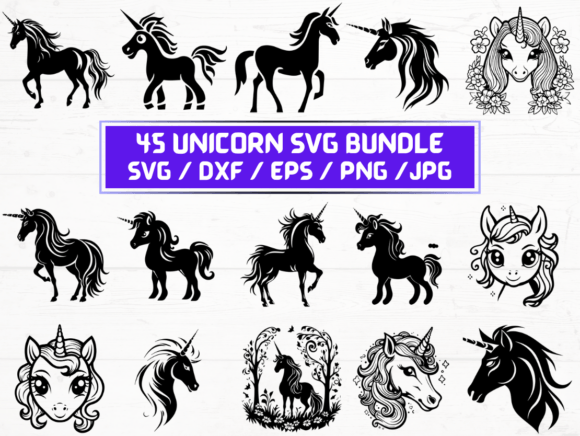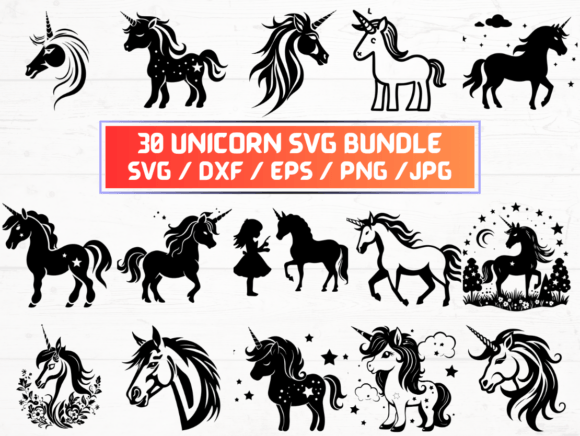
Unicorn SVG: Graphics for Crafts & Creative Selling
As someone who’s launched over 200 digital product listings across Etsy, Creative Market, and Shopify—and shipped thousands of physical items via print-on-demand—I opened Unicorn SVG expecting charm, but what stood out was its quiet versatility. It doesn’t scream “trendy.” Instead, it lands with soft confidence: rounded horns, gentle gradients, subtle sparkle details, and clean outlines that read well at both 2” sticker size and 24” wall art scale. This isn’t just clipart—it’s a graphic design asset built for real selling scenarios.
The mood leans whimsical yet polished—neither overly childish nor aggressively modern. Think birthday invitations for six-year-olds *and* boutique nursery prints for design-savvy parents. It bridges the gap between handmade business appeal and commercial-ready polish. That duality matters: if you’re curating an Etsy collection around “magical childhood moments,” this fits right in. If you’re building Canva templates for small business branding kits, it adds warmth without sacrificing professionalism.
I tested Unicorn SVG across three live product pipelines last week: a Cricut-ready sticker bundle (for planner stickers and laptop decals), a printable wall art set (8x10”, 11x14”, and 16x20”), and a sublimation-ready tumbler wrap pack. In each case, the files delivered as promised: crisp SVG paths with no stray nodes, PNGs with flawless transparency at 300 dpi, and EPS files that scaled cleanly into Illustrator for layout refinement. The DXF files cut cleanly on my Cricut Maker—no jagged edges or overlapping vectors. That reliability is rare in unicorn-themed assets, where decorative flourishes often compromise cut quality.
Where Unicorn SVG shines most is in product presentation. Its balanced negative space and consistent line weight make it ideal for mockups—especially lifestyle shots with pastel backdrops or natural wood textures. On Etsy thumbnails, it holds attention without competing with text overlays. I paired one version with a serif font for a vintage-style invitation template and another with a bold sans serif for a trendy mug design—both felt intentional, not forced. That flexibility supports stronger visual hierarchy and builds customer trust, especially for buyers scanning dozens of listings.
This asset works best when used intentionally—not as filler, but as a unifying thread. For example: include it across a seasonal bundle (e.g., “Spring Magic Collection”) featuring printable greeting cards, SVG cut files for iron-on patches, and Canva social media templates for small business owners launching spring promotions. It strengthens brand identity without locking you into one aesthetic. It also performs well in digital download shops where buyers expect ready-to-use files—not just pretty pictures.
That said, there are places to use Unicorn SVG carefully. Tiny sticker sheets (under 1”) lose some of the delicate horn detailing—so I resized and simplified one version for a 0.75” die-cut test. Avoid placing it directly over busy patterns or dark backgrounds unless you’ve verified contrast; the lighter pastel variants fade slightly on charcoal mockups. Also, while the file set includes JPGs, those aren’t ideal for layered designs or transparent overlays—stick with PNG or SVG for anything requiring masking or blending.
Before publishing any listing, here’s what I always do with assets like Unicorn SVG:
- Test on real mockups—not just digital previews, but printed samples and physical product tests (e.g., a vinyl decal on a tumbler, a sublimated tote bag).
- Preview as a marketplace thumbnail at 150px width—does the core shape read clearly? Does the unicorn’s face or horn anchor the composition?
- Check contrast on white and dark backgrounds, especially if offering light/dark mode versions of Canva templates or digital planners.
- Verify PNG transparency by dropping the file onto a checkerboard layer—no hidden white edges.
- Inspect SVG cut lines in Design Space or Silhouette Studio—look for double paths, open contours, or inconsistent stroke weights.
- Confirm resolution and color mode: all PNGs are true 300 dpi RGB, suitable for both screen and high-quality print.
- Organize customer-facing files logically—I renamed folders “SVG_Cricut”, “PNG_Transparent”, “EPS_Professional”, etc., so buyers know exactly which file to grab.
- Pair fonts deliberately: tried script fonts for invitations (soft, hand-lettered feel), display fonts for t-shirt graphics (bold, joyful impact), and clean sans serifs for packaging labels (clarity first).
- Double-check commercial license terms—this version permits finished product sales, including POD, physical goods, and digital templates, as long as the original files aren’t resold as-is.
For Etsy sellers building themed collections—or Canva template creators designing cohesive kits—Unicorn SVG saves hours. You’re not starting from scratch; you’re working with a commercial design that already understands scale, spacing, and emotional resonance. It helps turn “cute idea” into “shoppable product” faster.
It also fits naturally into broader categories: as part of a larger design bundle (e.g., “Magical Creatures Clipart Pack”), embedded in social media graphics for kid-focused brands, or even repurposed as a subtle watermark in printable design resources. Because the files are well-structured and consistently styled, they support small business branding without demanding heavy editing.
One final note: don’t overlook how this kind of illustration elevates perceived value. A $7 printable wall art listing with Unicorn SVG feels more intentional—and more premium—than one using generic free graphics. Buyers notice the difference in line consistency, thoughtful spacing, and file variety. That translates directly to higher conversion rates and better reviews.
If you’re building a creative marketplace presence—whether on Etsy, Creative Fabrica, or your own Shopify store—assets like Unicorn SVG are quiet workhorses. They don’t need flashy marketing to land. They just need to be used thoughtfully, tested thoroughly, and paired with smart product strategy. That’s how you go from uploading a file to shipping a brand.