Camping SVG: A Designer’s Real-World Embroidery Review
As a designer who’s stitched hundreds of custom pieces—from boutique baby onesies to Etsy best-selling tote bags—I opened the Camping SVG bundle with quiet curiosity, not hype. I wasn’t looking for “cute” or “trendy.” I was asking: Will this hold up under needle and thread? Will my clients love it as much on a sweatshirt as they do in the listing thumbnail? And most importantly—does it feel like a design built for real embroidery, not just digital display?
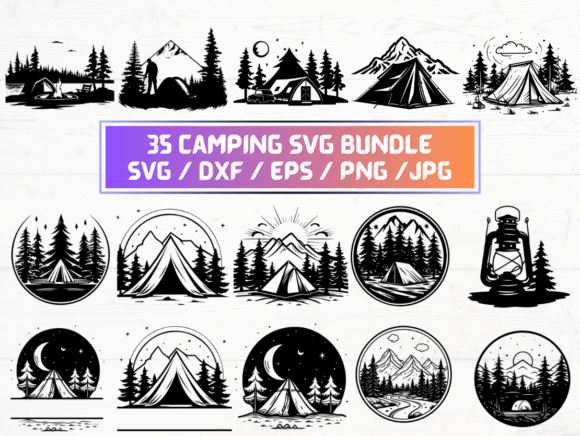
I tested it immediately on a natural linen tea towel—a favorite for small shop merchandise—using medium-weight cutaway stabilizer and 40-weight rayon thread. The first stitch-down revealed what matters most: clarity without clutter. The Camping SVG collection leans into friendly, hand-drawn charm—not hyper-realistic, not overly minimal—but balanced. Think pine trees with soft tapering branches, a cozy tent with gentle shadow lines, and a campfire whose flames read clearly even at 3.5 inches wide. No tiny, un-stitchable details. No overlapping strokes that would vanish in fill stitch. Just clean, confident shapes that translate well from screen to fabric.
Where Camping SVG Truly Shines (and Where It Needs Thought)
This isn’t a one-size-fits-all embroidery file—it’s a mood, a moment, a product category waiting to be filled. Here’s where it lands strongest:
- Custom apparel for outdoor brands: On a heavyweight cotton sweatshirt, the Camping SVG works beautifully centered above the left chest. Its moderate width (roughly 3–4 inches across most files) avoids stretching over seams or distorting on curved surfaces like raglan sleeves.
- Tote bag designs: Perfect for the lower corner of a canvas tote—especially when paired with subtle running-stitch borders or a single-line trail motif. The design breathes; it doesn’t overwhelm the fabric’s texture.
- Baby embroidery & nursery decor: On organic cotton onesies or muslin pillow covers, the gentle scale and rounded edges feel warm and safe—not graphic or sharp. I’d avoid dense fill-stitch versions here; opt for satin-stitch outlines or low-density fills to keep it soft against delicate skin.
- Holiday and personalized gifts: Paired with a simple monogram or date (“Est. 2024”), the Camping SVG becomes instantly meaningful—ideal for Father’s Day aprons, anniversary picnic blankets, or wedding weekend welcome towels.
But let’s be direct: it’s not ideal for every surface. On stretchy knits like jersey tees, I’d digitize a simplified version—or use it as an applique base rather than direct-embroider. Tiny lettering (if included in any variant) would need testing on dark fabric: those fine strokes can blur without proper underlay or contrast thread. And while the files include EPS and DXF formats—great for vector editing—the original SVGs are what most embroidery software imports cleanly. Always open one in your editor first to check anchor points and path continuity before sending to your machine.
What This Means for Your Craft Business
If you’re an Etsy seller, small shop owner, or craft fair vendor, Camping SVG isn’t just another graphic—it’s a ready-made story hook. Customers don’t buy “a tent icon.” They buy nostalgia, adventure, simplicity. That emotional resonance lifts perceived value. A $28 embroidered linen napkin feels intentional and cohesive because the Camping SVG design supports, not competes with, the material’s texture and drape.
That said—don’t skip due diligence. Before listing a finished product:
- Test stitch one file on scrap fabric matching your final product (e.g., terry cloth for kitchen towels, fleece for blankets).
- Check stitch density: high-fill areas should lie flat, not pucker—even after washing. If threads lift or bunch, reduce density or switch to a lighter fill pattern.
- Confirm hoop size compatibility. Some files may push 5x7" limits; if you work mostly with 4x4 hoops, plan for repositioning or simplification.
- Review licensing. The listing says “INSTANT DOWNLOAD” but doesn’t state commercial use terms—verify before selling physical items or bundling digitally.
- Use printable mockups. Drop the PNG (300 dpi, transparent background) into lifestyle scenes—on a wooden table, draped over a backpack—to gauge how it reads at retail scale.
Design Notes You’ll Actually Use
Here’s what I jotted in my sketchbook after stitching three variations:
- Fabric texture matters more than you think. On nubby burlap or thick denim, lean into bold satin-stitch outlines from the Camping SVG files—details pop better than dense fills.
- Thread color contrast is non-negotiable. On dark fabric, test white or cream thread—not just black. Some Camping SVG motifs rely on shape, not shade; low-contrast combos lose legibility.
- Stabilizer choice changes everything. For lightweight cotton tea towels? Tear-away + light spray. For curved caps? Cap-friendly cutaway + adhesive film. Don’t assume one fits all.
- It works both ways. As a standalone machine embroidery design, yes—but also as a foundation for hand-embroidered accents (think backstitch campfire sparks over satin-stitched logs). That versatility makes it valuable beyond digital-only workflows.
- Small business branding potential. Simplify one motif into a logo lockup (tent + initials), then use the full set as pattern elements on packaging or tags. Consistency builds trust—fast.
In short: Camping SVG earns its place in a working designer’s library—not because it’s flashy, but because it’s thoughtful. It respects fabric. It respects time. And it respects the person holding the finished product: whether that’s a kid clutching a custom patch, a bride unfolding a picnic blanket, or a craft buyer choosing between ten similar listings on Etsy. When your handmade product feels intentional—not just “embroidered”—that’s when customers remember your name. And that starts with choosing the right embroidery file.